
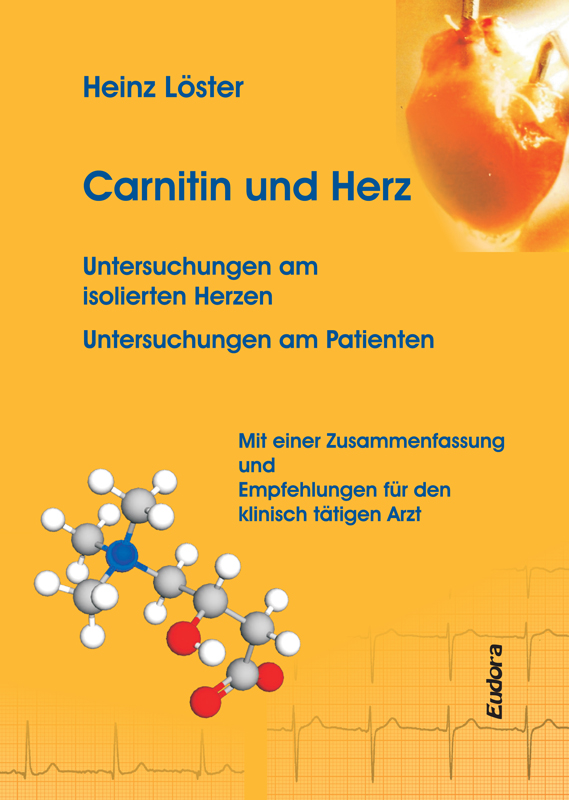
Description
PRESENTATION OF RESULTS FROM CARNITINE RESEARCH
Carnitine is a naturally occurring substance with significant effects on both humans and animals. It affects almost all organs, but especially the heart.
The heart derives most of its energy from the metabolism of long-chain fatty acids. However, these can only penetrate the inner mitochondrial membrane in cells after esterification with carnitine. Due to this barrier function of carnitine, a carnitine deficiency has extremely negative effects on cardiac function. In most heart diseases, especially chronic ischemic heart disease, a reduced carnitine concentration in the heart is indeed observed.
Studies on isolated rat hearts have shown that the administration of carnitine significantly altered the measured cardiac parameters. Coronary flow, left ventricular ejection fraction, and left ventricular pressure increased, sometimes dramatically, with carnitine administration compared to controls, while heart rate decreased. After a period of ischemia of varying duration, it was observed that cardiac function could be maintained for longer despite oxygen deprivation. During the reperfusion period, normal cardiac function returned more quickly and coronary artery blood flow increased.
These observations have also been confirmed in patients with heart disease of various etiologies. Although the results of a study often did not differ significantly between active and placebo patients, a clear trend toward an improvement in the parameters examined was observed in almost all cases. Carnitine has positive effects on both heart rate and blood pressure, and especially on the exercise tolerance of patients with chronic ischemic heart disease. The positive effect on patient exercise tolerance depends on the duration of medication and increases with increasing treatment time. Furthermore, a reduction in life-threatening cardiac arrhythmias and a reduction in the formation of toxic intermediates (free radicals) were observed.
Overall, the administration of L-carnitine in cardiovascular diseases led to an improvement in cardiac function.
The results are supported by citations from numerous publications in the international literature.
2025, 256 pages, Hardcover, 182 illustrations/figures mostly in colour, 43 tables, 17 x 24 cm;
ISBN: 978-3-938533-94-9
Reviews
There are no reviews yet.